$170B blocked · 46 projects · 20 states

The credible grade
for the data-center fight.

GridWatcher turns public records into a sourced A–F grade for every US data-center project — then arms communities to act on it. Un-buyable by the people being rated.

The axiom: un-buyable by design. We take no developer or hyperscaler money, ever.
$170B
blocked, withdrawn or stalled
46
projects across 20 states
142
protests, 42 states, one day
A–F
the grade for every project
The problem

The buildout hit a wall — and it’s a trust wall.

Communities aren’t rejecting infrastructure out of reflex. The #1 cited cause of blocked projects is a lack of transparency around ownership, power, and water.

In Q1 2026 alone, ~75 projects worth ~$130B were blocked or delayed — roughly the whole of 2025 in a single quarter. Nobody owns the credible, neutral read on what’s actually in the deal. That’s the gap.
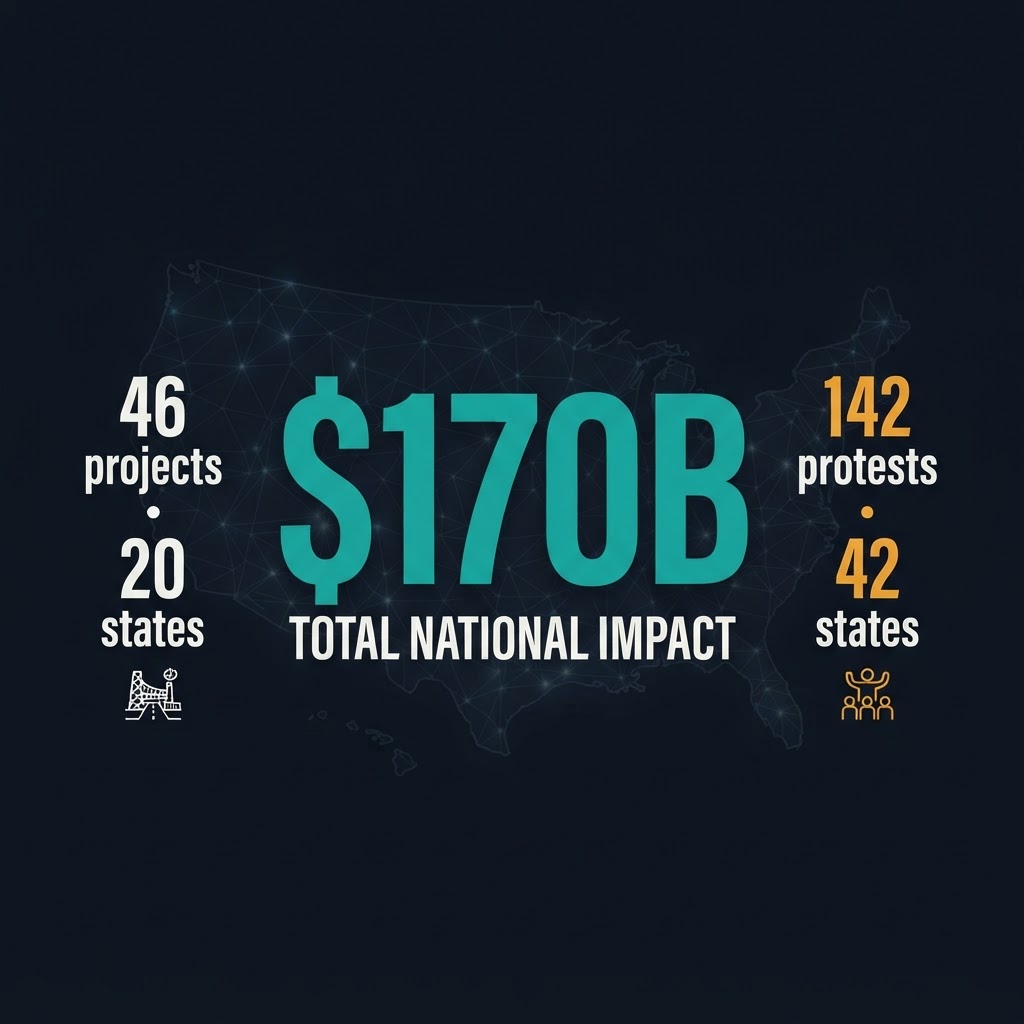
$170B in blocked or stalled data-center projects across the US
Why now

A sitting congressman just nationalized the thesis.

The transparency triad we grade is now the center of federal and state policy.

NY

First statewide moratorium

New York enacted a one-year pause on large new data centers (Executive Order 62, Jul 2026) while it writes the rules.

HR

Data Center Bill of Rights

Rep. Ro Khanna’s Aug 2026 resolution demands community control plus transparency on ownership, power & water — our exact grading triad.

42

Bipartisan & national

142 protests across 42 states in a single day; ~203 local moratoriums tracked. Opposition splits ~55% R / 45% D.

The grade

A bond rating for data centers.

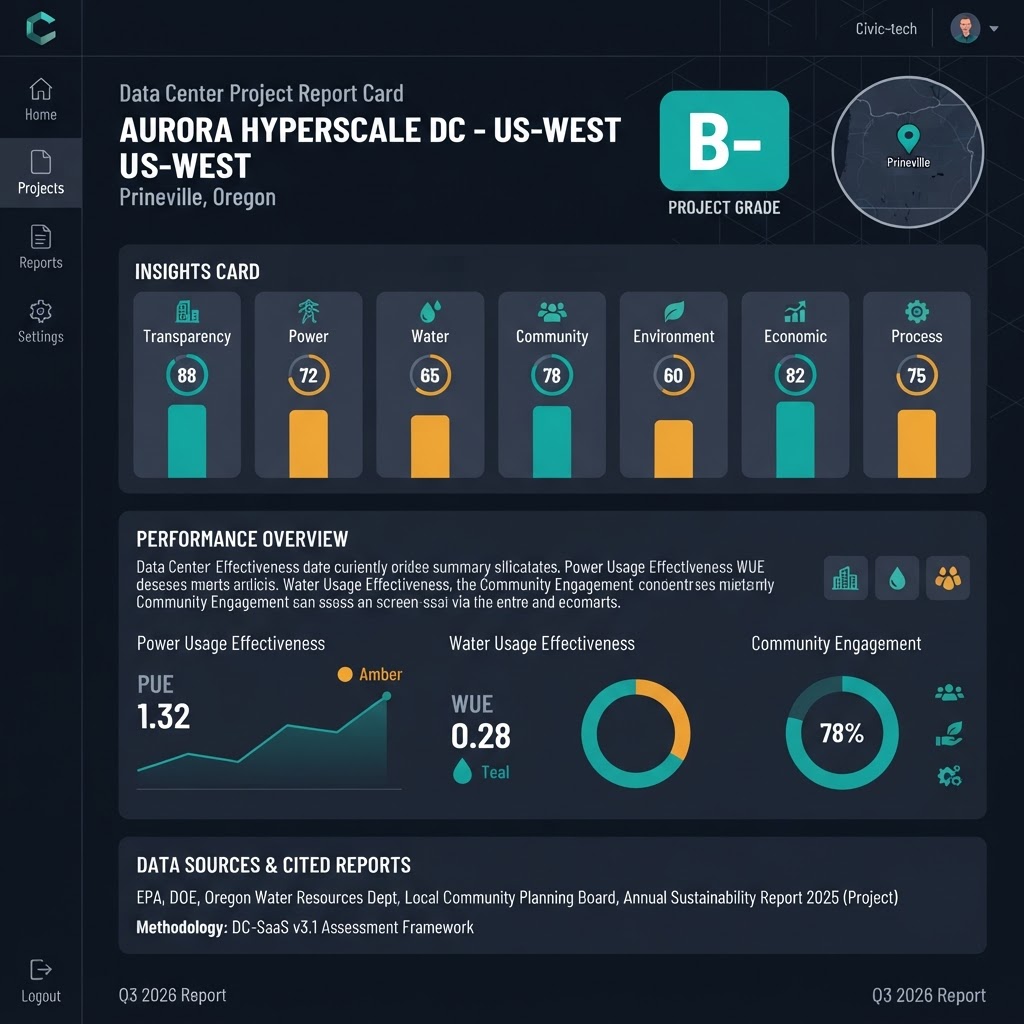
A weighted, published, versioned methodology scores every project across seven pillars. Every sub-score cites its source — a permit number, a filing link, a meeting-video timestamp. Missing data reads “Insufficient Disclosure,” never a guessed number.

PillarWeight
Transparency25%
Power / Grid20%
Water15%
Community Benefit15%
Environmental10%
Economic Fairness10%
Process Integrity5%
GridWatcher project report card with A–F grade and seven scored pillars
How it works

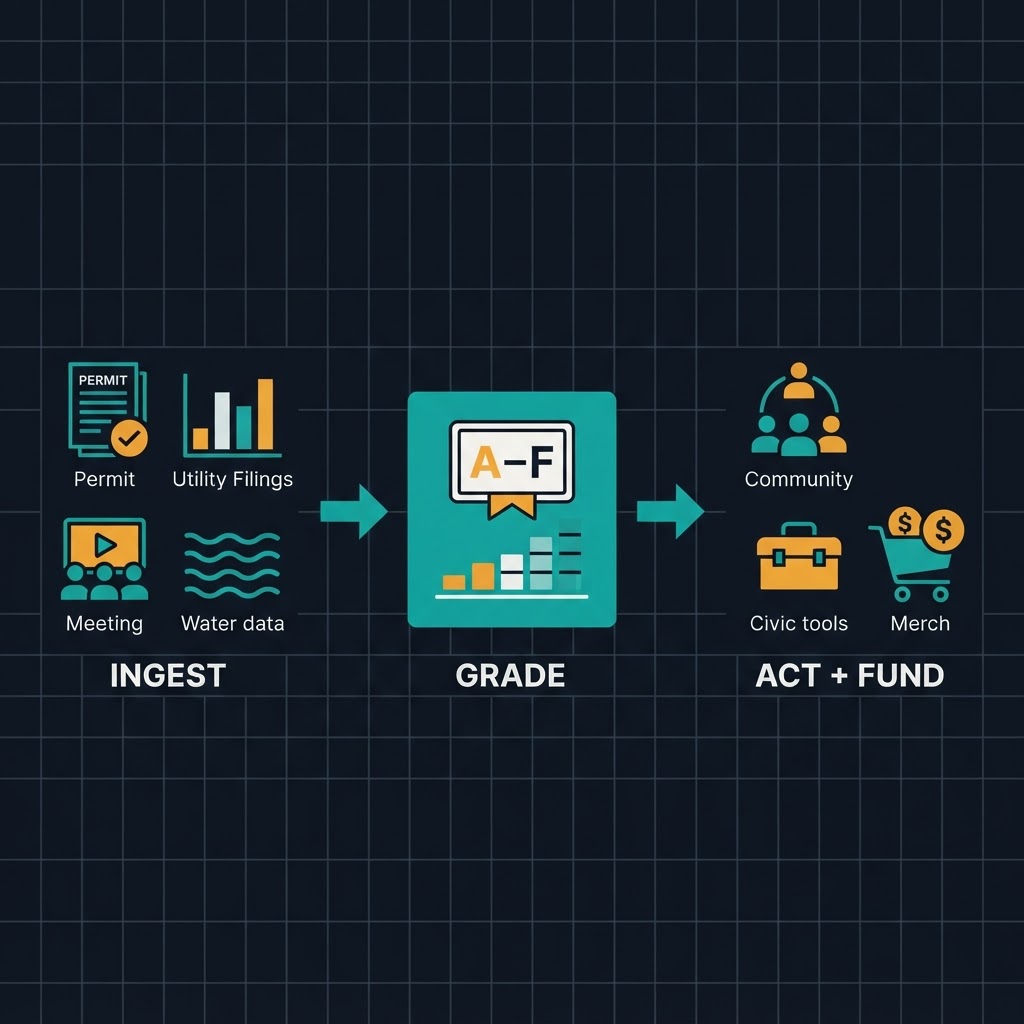
Ingest → Grade → Act → Fund.

Public records in. A credible grade and a community toolkit out.

01 · INGEST

Public records

Permits, utility filings, water data and meeting minutes — normalized into one dataset.

02 · GRADE

Sourced A–F

A rules-based engine scores the seven pillars. An LLM only extracts facts — never sets the grade.

03 · ACT

Civic toolkit

Templated comments, meeting calendars, petitions, and a “Build It Right / yes-if” track.

04 · FUND

Mission revenue

Leader Pro, sourced dossiers, and civic merch — funding from the community side, never developers.

GridWatcher ecosystem: ingest public records, grade, then act and fund
The moat

Un-buyable by the people being rated.

We take no money from developers, operators, or hyperscalers — ever. Not funding, not equity, not sponsorship, not paid right-of-reply. The instant grades look for sale, the product is worthless. Independence isn’t a constraint — it’s the entire asset.

  • Credibility moat: the cited, trusted grade in a transparency-obsessed market.
  • Data moat: a normalized dataset built from fragmented public records.
  • Workflow moat: the community action layer that sits on top of the grade.
GridWatcher A–F grade badge
Who it’s for

Communities, leaders, press — and the backers who fund them.

C

Communities & coalitions

See the grade for the project near you, and get the receipts to comment, organize, and push for a better one.

L

Leaders & press

A neutral, sourced grade you can cite in testimony and reporting — because no developer money touches it.

$

Mission-aligned backers

Fund the category-defining, un-buyable authority for the decade’s biggest infrastructure fight.

The ask

Back the credible authority.

Before the incumbents wake up. Grab the full investor & partner briefing, or reach out to plug in with data, distribution, or capital.